
At Sima the Sapphire technique is an engineering choice, not a slogan. A sapphire crystal blade opens finer channels at a calculated angle for each follicle, so density reads naturally across the top of the head and the crown, and recovery follows the usual FUE timeline. The specialists who operate in the group's Istanbul centre perform it in our licensed clinic in Aleppo and stay with you over WhatsApp until the twelfth month after you fly home. Send two photos and a written graft estimate comes back, with no obligation and no fee.

The density people fly to Istanbul for, by the team that operates there, in Aleppo
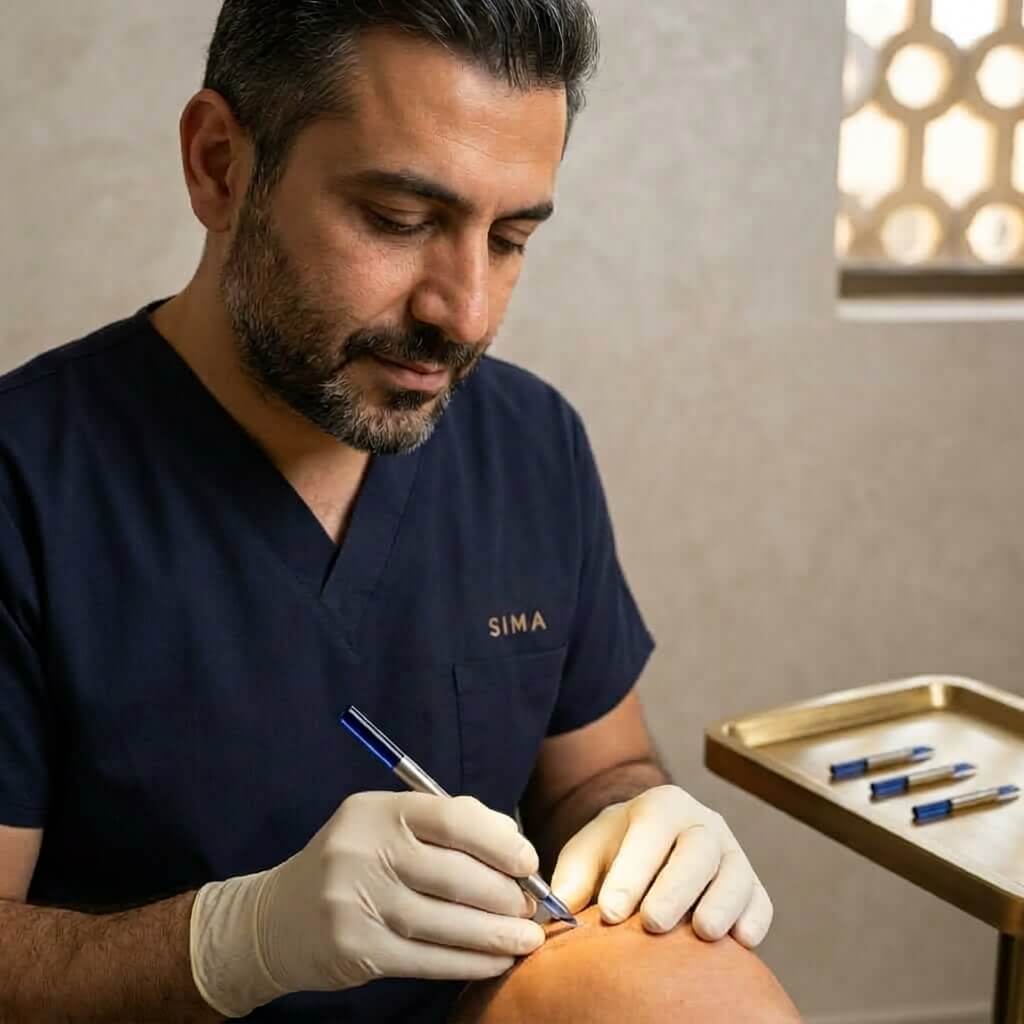
The difference is not the name of the technique. It is the blade, the hand that holds it, and the bill you fly home with. A Sapphire FUE hair transplant at Sima is performed by Your Hair Center’s Istanbul team, in a licensed clinic in Aleppo, at a Syrian price.
years of experience
Your Hair Center’s Istanbul team, rotating between the two centres
grafts in one session
The approximate upper limit for a single Sapphire session; the donor area sets the real limit
nights in Aleppo
Pre-operative check, procedure day, first wash at the clinic and a day of rest, then fly home

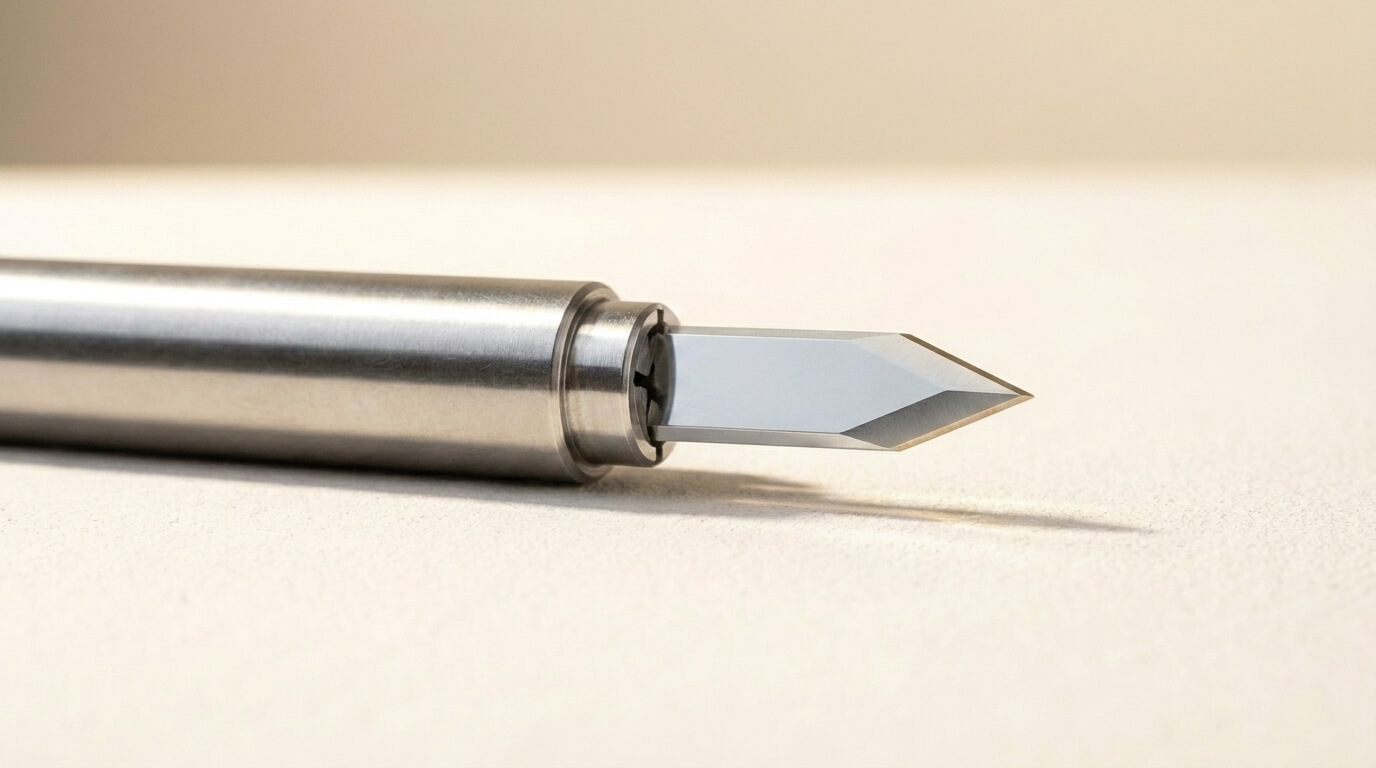
Steel blade against sapphire crystal, the difference under the microscope
An engineering explanation, not advertising. The blade is the decisive moment in a Sapphire FUE hair transplant, because it sets the precision of the channel that receives the follicle.
The conventional steel blade
- A channel sized to the graft, often about 1 mm
- Crusts clear in 7 to 14 days, as with sapphire
- The angle of each channel is set by the doctor’s hand

The sapphire crystal blade
- A fine angled tip that, by engineering calculations, leaves the smallest wound of the blade shapes compared
- The same recovery, with crusts clearing in 7 to 14 days
- A calculated angle for each follicle, set by the doctor to follow the natural direction of hair growth
A practical result, directly in the scalp
Your Hair Center's Istanbul team, and a Sapphire record measured in numbers
The record speaks in numbers, not slogans. Years of Turkish practice, a documented session capacity, and daily follow-up in the first week, then scheduled reviews until a full year after the procedure. The specialists are engaged through the group’s own Istanbul centre and rotate to Aleppo, and you can look up the Istanbul centre at yourhaircenter.com before you decide. Sima is a licensed clinic in Aleppo. Your Hair Center is a licensed medical-tourism centre in Istanbul working through accredited partner hospitals.

Sapphire procedures, year by year
2026 (to date)
Sapphire cases performed in Aleppo since the start of the year, under the direct supervision of the Istanbul team.
2025
The first full year of the Sapphire technique in Aleppo, with the Istanbul team supervising day by day.
2024
The Istanbul team begins operating in Aleppo, after years of set-up and preparation.
The Istanbul years before
More than a decade of practice in our Istanbul centre before the expertise moved to Aleppo.
A record you can audit
The Istanbul record for Sapphire, in numbers
- Cumulative experience of more than 12 years in FUE and Sapphire within the group’s Istanbul team, which rotates between the two centres
- Single-session capacity of up to 4,000 grafts with the Sapphire technique
- Documented follow-up at month six and month twelve, guaranteed within the programme, in person or over WhatsApp after you fly home
- Documented consent policy, Published with documented client consent, for every published case without exception
Sapphire, DHI and classic FUE. Which one fits you
Many visitors reach this page having heard of more than one technique. The table puts the differences side by side so that you choose with knowledge rather than hearsay. Each one is a method inside a hair transplant, not a procedure of its own.
| Criterion | Classic FUE | DHI (Choi pen) | Sapphire (Sima's recommendation) |
|---|---|---|---|
| How the channel is opened | A conventional steel blade | A Choi pen that combines opening and implanting | A sapphire crystal blade, a fine separate channel |
| Expected density | Good | High over small areas | High over wide areas |
| Initial recovery period | 7 to 14 days | 7 to 14 days | 7 to 14 days |
| Best suited to | Moderate cases | Densifying a specific point, the front hairline | The top of the head and the crown together, a natural result |
| Single-session capacity | Up to about 4,000 grafts | About 3,000 grafts a day | Up to about 4,000 grafts |
| Sima's default recommendation | Simpler cases | A precise front hairline | Adult men, top of the head and crown, a natural result |
The final decision starts with a photo, not a word
Three stages, from extraction to implantation
We explain them in the language a client understands, not the language of medical textbooks. Each stage has one clear aim, and the second stage is what sets a Sapphire FUE hair transplant apart from the others.
Extraction from the donor area
The Istanbul team prepares the back and sides of the scalp, then extracts the follicles one by one with a fine instrument. The grafts are kept in a chilled solution to preserve their vitality before implantation, with the count monitored moment by moment.
Opening the channels with the sapphire blade, the decisive step
This is where the Sapphire technique shows. A blade of sapphire crystal opens very narrow channels at a calculated angle for each follicle, following the natural direction of hair growth around every point. Recovery then follows the same timeline as any FUE technique.
Implanting the grafts, and handing you over to day one
Each extracted graft is placed in its own channel, at a calculated density across the top of the head and the crown. At the end of the session you receive written instructions, a full aftercare kit and the WhatsApp number of a team that answers at any hour during the first week, and you are back at your hotel by evening.
From the full result back to day one
Reverse the usual order. Know where you end before you decide how to begin. Six milestones, with time running down from the year to the first day, and the team on WhatsApp wherever you are.
Month twelve, the final result
Full density is visible, and the hair is long enough for your usual style. This is when the reference photograph goes into your file, in person or from the photos you send. The transplanted hair is natural, and can be cut, dyed and washed like any other hair.
Month six
Sixty to seventy percent of the expected density is now visible. The difference between before and after has become clear to the people around you, even to those who do not know you had the procedure.
Month three
The end of the shedding phase and the start of real growth. The new hair appears fine at first, then thickens gradually week by week.
Month one
Shock shedding is normal and expected, and it does not mean the procedure has failed. The follicle stays under the skin and prepares to produce a new, stronger hair.
Week one, fly home
Most visitors fly home on day four or five, after the first wash at the clinic. Daily check-ins continue on WhatsApp, the second wash on day ten is guided wherever you are, and you are back at office work and in your usual company after 3 to 7 days.
Day one, an evening in Aleppo
Back at your hotel by evening, a few minutes from the clinic, with an English-speaking coordinator one message away and the first wash at the clinic the next morning. Aleppo is a calm city to recover in, and far cheaper to stay in than Istanbul. If you are Syrian and coming home, time the procedure with the visit; the team stays with you over WhatsApp after you fly back.
Prayer and wudu after the procedure
The full price, compared on the table
Many people compare the procedure price alone and forget that any trip comes with flights, a hotel and lost working days. Choose the scenario you were considering and let the numbers speak. The Istanbul tabs show what a typical trip there costs, and the Sima tab shows the Aleppo trip.
| Item | Cost | Note |
|---|---|---|
| Procedure, full package | about $1,200 | The full package, no hidden fees, the same team as our Istanbul centre |
| Flights | Direct from Istanbul, Sharjah or Kuwait | Arranged by Sima, billed separately at cost |
| Hotel × four nights | At Aleppo hotel rates | Arranged by Sima, billed separately at cost |
| Working days lost | Four to five | Fly home after the first wash |
| Real total | about $1,200 plus travel at cost | Confirmed in writing after the consultation |
| Item | Cost | Note |
|---|---|---|
| Procedure, full package | ~$1,800 | A standard package at a mid-range clinic |
| Return flights | From your own city, at your cost | Economy from your nearest airport |
| Hotel × four nights | At your cost, Istanbul rates | A three-star hotel near the clinic |
| Working days lost | Four to five | Travel and recovery away from home |
| Real total | ~$2,570 | Daily incidentals not counted |
| Item | Cost | Note |
|---|---|---|
| Procedure, full package | ~$3,500 | A premium package at a well-known clinic |
| Return flights | From your own city, at your cost | Economy from your nearest airport |
| Hotel × five nights | At your cost, Istanbul rates | A four- or five-star hotel |
| Working days lost | Five to seven | Travel and recovery away from home |
| Real total | ~$4,800 | With daily meals and transport |
Transparent pricing
Four steps to know whether the Sapphire technique suits you
We ask you the same questions our team asks in the first consultation, before you pay anything. The initial answer reaches you on WhatsApp within twenty-four hours, even if the answer is no.
Age
Usually from 25 once hair loss is stable, never below 20, and no upper limit for a healthy person with enough donor hair.
Loss pattern
We place your stage on the Norwood scale from a simple photo taken from above and from the sides.
Donor density
The Istanbul team assesses the back of the head from a rear angle and calculates the possible capacity precisely.
General health
Chronic conditions, current medication, any medical note. A short form sent over WhatsApp.
An initial estimate reaches you on WhatsApp
What clients ask before deciding
These questions concern the technique and the medical result, with one about the trip and one about religious permissibility at the end.
Does the transplanted hair keep growing for life?
Yes. The follicles are taken from the donor area at the back of the head, which is genetically resistant to DHT, the hormone responsible for baldness. The transplanted hair therefore keeps growing for life and is treated like any natural hair. You can cut, dye and wash it without restriction once you have healed.
What is the graft survival rate with the Sapphire technique?
In a Sapphire FUE hair transplant the survival rate depends on the hand more than the blade. One observational study of 1,000 patients found 94.7 percent graft survival with sapphire blades and 88.9 percent with steel, while a small study found that handmade steel blades caused less tissue damage, so the evidence is limited and mixed.
Will a scar remain in the donor area?
A Sapphire FUE hair transplant takes the follicles one by one, so there is no linear scar. The FUE method leaves no linear scar of the kind the older surgical techniques left. Very small dots remain, which disappear visually under the usual short hair length and become unnoticeable to the people around you within weeks.
Will the procedure harm my existing hair around the transplanted area?
If the channels are opened precisely and at the right angle, the risk to the surrounding hair is very low. This is where an experienced team matters: the temporary shedding of surrounding hair called shock loss rises with very dense packing and local trauma, while a wrong angle gives the hair an unnatural direction.
What anaesthetic is used, and will I feel pain?
The anaesthetic is entirely local, applied to the scalp, with no general anaesthesia. During the procedure you can talk and use your phone. Pain after the procedure is mild, and simple painkillers are enough for the first day or two.
Can Sapphire and DHI be combined in the same session?
In many cases the team performs the top of the head and the crown with the Sapphire technique and densifies the front hairline with DHI in the same session. The decision depends on the geometry of the face and the stage of hair loss, and the doctor makes it after seeing your photos.
How many nights does a Sapphire FUE hair transplant need in Aleppo?
Four nights covers the pre-operative check, the procedure day, the first wash at the clinic and a day of rest. Many visitors add a day for the citadel and the souq. Travel, hotel and airport pickup are arranged by Sima and billed separately at cost. Most Western governments advise against travel to Syria; their advice is linked on the travel guide, beside what operates on the ground.
Is a hair transplant permissible in Islam?
The majority of contemporary scholars permit it, as a treatment that removes a defect rather than a change to God’s creation. The procedure moves the client’s own hair from the donor area to the area that needs it, with no foreign material and no deception, which is what separates it from the prohibited practice of attaching hair extensions. Senior scholarly bodies and several fiqh councils have issued explicit rulings permitting the procedure when its aim is to treat baldness. If the question matters to you, we suggest consulting a scholar you trust alongside the medical consultation.
Promise nothing, just ask
We answer with respect and without pressure, even if Sima is not your choice in the end. The consultation is free and commits you to nothing, and the answer is candid.
